Nutrition Basics
How to Read Nutrition Labels Like a Pro
Most people read nutrition labels wrong on three lines. Here is what to actually pay attention to.
June 10, 2026 · 8 min read
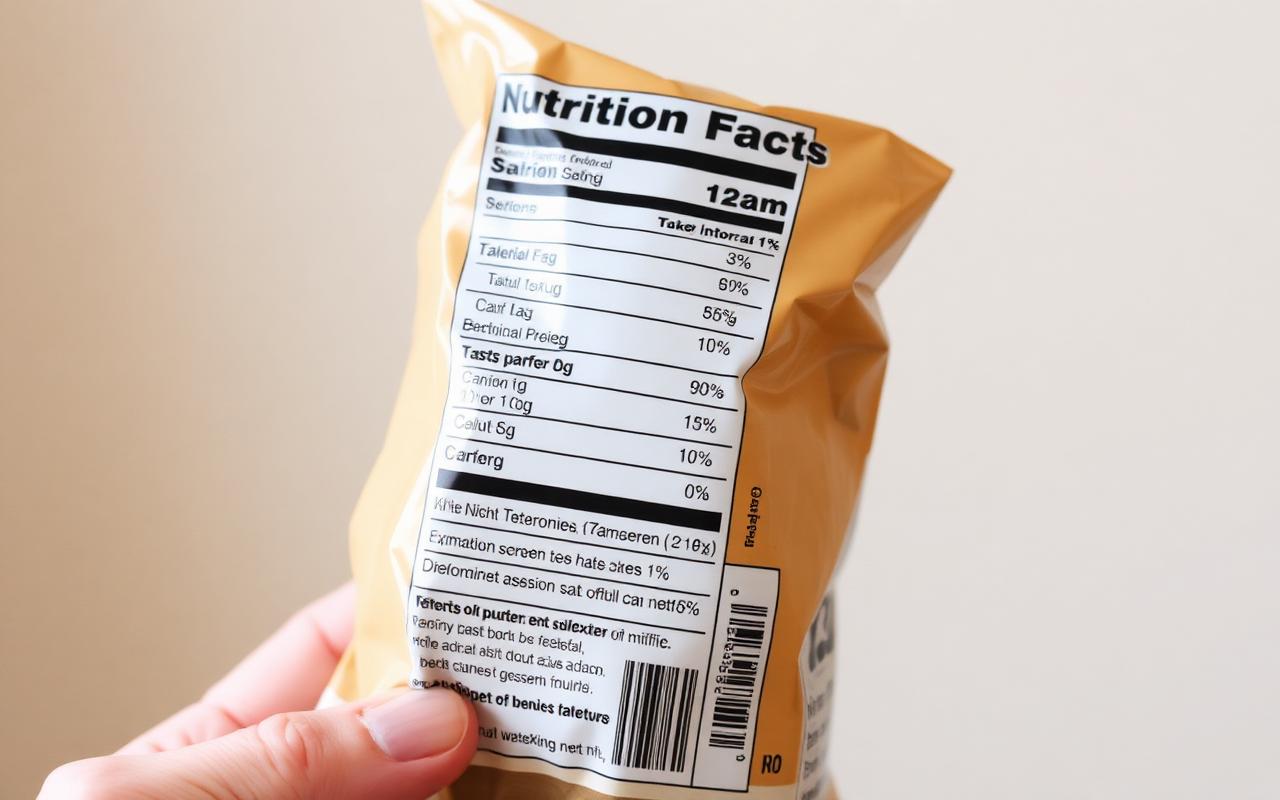
Understanding how to read a nutrition facts label is one of the most effective skills you can develop for long-term weight management and health. While the black-and-white grid on food packaging may seem like a jumble of numbers, it provides a standardized roadmap for precisely what you are putting into your body.
The Food and Drug Administration (FDA) updated the nutrition facts label requirements in recent years to make key information—like serving sizes and added sugars—more prominent. Mastering these labels allows you to move past marketing claims like "natural" or "healthy" and look directly at the data.
1. The Serving Size Trap
The most critical part of the label is the very top line: the serving size and the number of servings per container. All the data that follows—calories, grams, and percentages—is based strictly on that single serving.
Many people glance at a bag of pretzels or a bottle of juice and assume the entire package is one serving. However, manufacturers often list small serving sizes that do not align with actual consumption patterns. If a bag of chips contains 150 calories per serving but has 3 servings per bag, eating the whole bag results in 450 calories.
Always calculate your "multiplier" first. If the serving size is 1/2 cup but you eat 1 cup, you must double every number on the label.
2. Deciphering Calories and Energy Density
Calories represent the amount of energy provided by a food item. For weight loss, the goal is often to find foods with a lower calorie density—more volume for fewer calories.
The FDA uses a "2,000 calories a day" benchmark for general nutrition advice, but your specific needs may be higher or lower based on your age, sex, weight, and activity level. When looking at the calorie count, consider the source:
- High calorie: 400 calories or more per serving.
- Moderate calorie: 100 calories per serving.
- Low calorie: 40 calories or less per serving.
To lose roughly one pound of body fat per week, most adults aim for a deficit of about 500 calories per day. Accurate label reading ensures this deficit is real rather than estimated.
3. Managing the Macronutrients
The three main macronutrients—Fat, Carbohydrates, and Protein—make up the bulk of the label. Each provides a specific number of calories per gram:
| Macronutrient | Calories per Gram | Role in Body |
|---|---|---|
| Total Fat | 9 | Hormone production and vitamin absorption |
| Total Carbohydrates | 4 | Primary energy source for the brain and muscles |
| Protein | 4 | Muscle repair and immune function |
Fats: Focus on Quality
Look for the breakdown of fats. While Total Fat is important for calorie counting, the type of fat matters for heart health. Aim for low amounts of Saturated Fat (less than 10% of daily calories) and zero Trans Fats, which are linked to increased LDL cholesterol.
Carbohydrates, Fiber, and Sugar
Under the Carbohydrates section, pay close attention to Dietary Fiber. High-fiber foods (at least 3–5 grams per serving) digest more slowly, helping you feel full longer.
The updated labels now include a line for Added Sugars. Unlike naturally occurring sugars found in fruit or plain dairy, added sugars provide "empty" calories and can spike insulin levels. Aim to keep added sugars below 50 grams per day on a 2,000-calorie diet.
Protein
Protein is the most satiating macronutrient. For those tracking macros to maintain muscle mass while losing weight, a general goal is 0.7 to 1 gram of protein per pound of body weight. If a label shows a high calorie count but very low protein (under 2–3 grams), that food is less likely to keep you satisfied.
4. Understanding the % Daily Value (%DV)
The Percent Daily Value (%DV) is a guide to how much a nutrient in a serving of food contributes to a total daily diet. It helps you determine if a food is high or low in a specific nutrient without having to do complex math.
- 5% DV or less is considered low. Use this for things you want to limit, like Sodium and Saturated Fat.
- 20% DV or more is considered high. Use this for things you want more of, like Fiber, Vitamin D, Calcium, and Iron.
For example, if a frozen meal contains 45% of your Daily Value for Sodium, you have consumed nearly half of your salt allowance for the day in one sitting, regardless of the calorie count.
5. The Hidden Logic of the Ingredients List
While the nutrition grid provides the "what," the ingredient list provides the "how." Ingredients are listed in descending order by weight. The first three ingredients make up the majority of the product.
If you are looking for a whole-grain bread, "Whole Wheat Flour" should be the first ingredient. If "Sugar," "High Fructose Corn Syrup," or "Enriched Flour" is at the top of the list, the food is highly processed and likely less nutrient-dense.
Be wary of multiple names for the same thing. Manufacturers may use different types of sugar (maltodextrin, cane sugar, dextrose) so that no single name appears at the top of the list, even though the total sugar content is high.
6. Sodium and Micronutrients
Sodium is a mineral that helps maintain fluid balance, but excessive intake is linked to high blood pressure. The USDA recommends limiting sodium to less than 2,300 milligrams (mg) per day—about one teaspoon of table salt.
Processed and packaged foods are responsible for about 70% of the sodium in the average American diet. Check the label for "Sodium" and aim for products with less than 140mg per serving to be considered "low sodium."
At the bottom of the label, you will find mandatory listings for Vitamin D, Calcium, Iron, and Potassium. These are the "nutrients of public health concern" because many people do not get enough of them. Checking these numbers is vital for preventing deficiencies.
7. Practical Tips for Label Reading in the Aisles
Reading labels becomes faster with practice. Use these three steps to filter foods quickly:
- Check the Serving Size: Is this a realistic amount for you to eat?
- Scan Total Calories: Does this fit into your daily budget?
- Look at the Protein-to-Calorie Ratio: For weight loss, a good rule of thumb is to look for roughly 1 gram of protein for every 10 calories (e.g., a 150-calorie snack with 15g of protein is excellent).
Logging these numbers manually can be tedious, but technology has simplified the process. Apps like Caloriez can scan a meal photo to log this automatically, pulling data from standardized databases to ensure your tracking is accurate without constant manual entry.
8. Identifying Marketing "Halo" Claims
Food manufacturers use specific terms on the front of the box to distract from the nutrition facts on the back. These are regulated but can be misleading:
- Light: Must have 1/3 fewer calories or 50% less fat than the original. This doesn't mean it is low calorie; a "light" version of a high-fat food can still be calorie-dense.
- Reduced Fat: Must have 25% less fat than the original. Often, manufacturers add sugar to compensate for the loss of flavor when fat is removed.
- Sugar-Free: Less than 0.5 grams of sugar per serving. However, it may still be high in calories from fats or sugar alcohols.
Always flip the package over. The marketing on the front is a pitch; the label on the back is the truth.
Key takeaways
- Verify serving sizes first: All label data is based on a single serving, which is often much smaller than a standard portion.
- Follow the 5/20 Rule: A 5% DV or less is low, while 20% DV or more is high; use this to prioritize fiber and minerals while limiting sodium and saturated fat.
- Watch for Added Sugars: Limit these to under 50g per day to avoid empty calories and metabolic spikes.
- Check the ingredients list: Ingredients are listed by weight; ensure the primary ingredients align with your nutritional goals (e.g., whole grains over sugars).
- Focus on Nutrient Density: Prioritize foods with high protein and fiber relative to their total calorie count to stay full while losing weight.
Track your calories the easy way
Caloriez uses AI to log meals from a single photo — calories, protein, carbs, and fat in seconds. Free on the App Store.
Download on the App Store