Food Calories
How Many Calories in an Apple? Full Nutrition Breakdown
A medium apple has about 95 calories and 4g of fiber. Here is the nutrition breakdown by variety and size.
June 3, 2026 · 6 min read
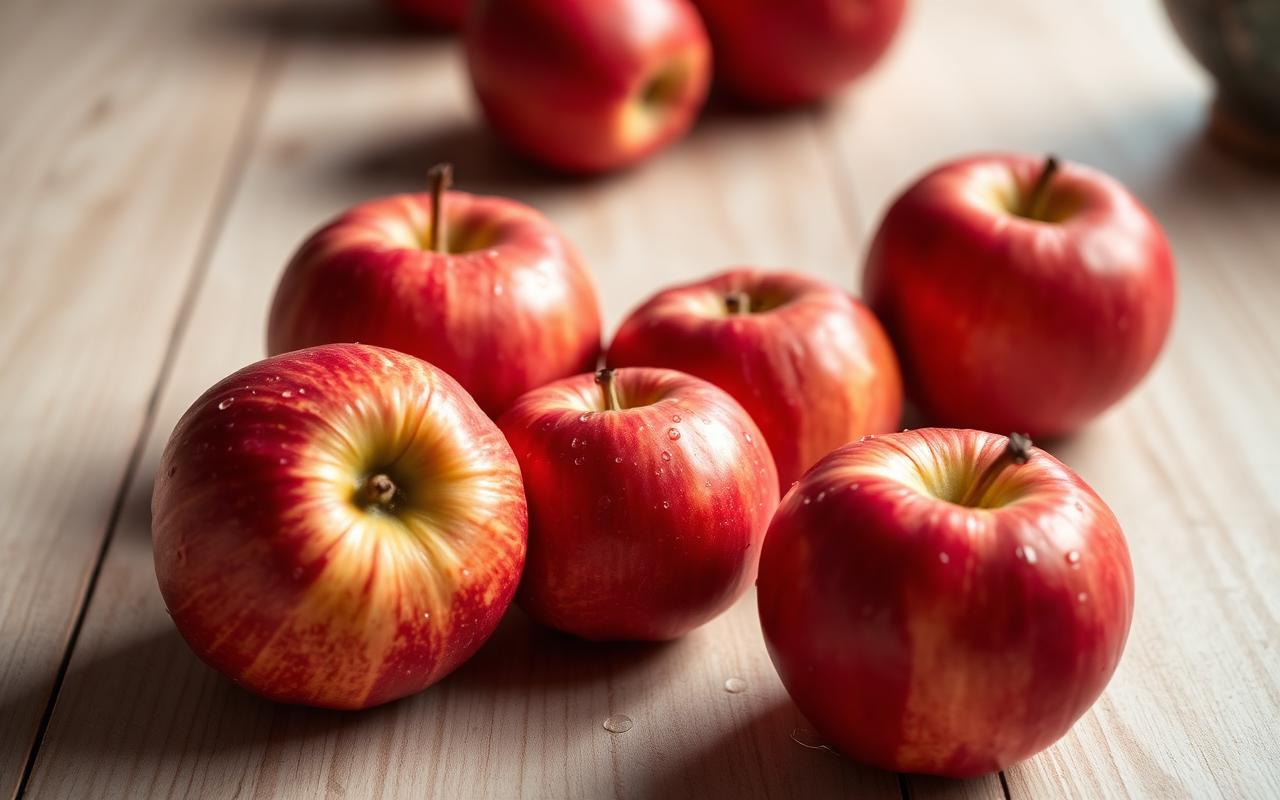
Apples are one of the most widely consumed fruits in the world, often serving as a staple for those focusing on weight management and blood sugar control. Understanding the precise caloric value and macronutrient profile of an apple involves looking beyond a single number and considering size, variety, and whether or not the skin is consumed.
Calorie Counts by Apple Size
The USDA National Nutrient Database provides standardized values for apples based on weight. Because apples vary significantly in size, from small lunchbox varieties to large honeycrisps, it is most accurate to measure by weight in grams. However, for quick tracking, you can estimate based on diameter or volume.
| Apple Size | Approximate Weight | Calories (Approx.) |
|---|---|---|
| Extra Small (2.5" dia) | 101g | 52 |
| Small (2.75" dia) | 149g | 77 |
| Medium (3" dia) | 182g | 95 |
| Large (3.25" dia) | 223g | 116 |
| Extra Large (3.5" dia) | 242g | 126 |
| Chopped (1 cup) | 125g | 65 |
| Sliced (1 cup) | 110g | 57 |
For the most precise tracking, use a standard value of 52 calories per 100 grams of raw apple with skin.
Macronutrient Profile of a Medium Apple
Most of the energy in an apple comes from carbohydrates, specifically a blend of simple sugars (fructose, glucose, and sucrose) and complex carbohydrates (fiber). They are naturally fat-free and contain negligible amounts of protein.
A standard medium apple (182g) typically contains:
- Total Carbohydrates: 25g
- Dietary Fiber: 4.4g
- Net Carbs: 20.6g
- Total Sugars: 19g
- Protein: 0.5g
- Total Fat: 0.3g
While the sugar content may seem high to those on ketogenic or low-carb diets, the fiber content significantly slows the rate at which these sugars enter the bloodstream. This results in a low Glycemic Index (GI) score, typically ranging between 34 and 38, making apples a stable energy source that avoids sharp insulin spikes.
Vitamins, Minerals, and Phytonutrients
Apples are more than just a source of calories; they are a concentrated source of micronutrients and antioxidants. One medium apple provides approximately 14% of the Daily Value (DV) for Vitamin C, which is essential for immune function and collagen synthesis.
Other notable micronutrients include:
- Potassium: 195mg (5% DV), which helps regulate blood pressure.
- Vitamin K: 4.0mcg (3% DV), essential for bone health and blood clotting.
- Vitamin B6: 0.07mg (4% DV).
The peel of the apple is particularly rich in phytochemicals, including quercetin, catechin, and chlorogenic acid. These compounds have been studied for their anti-inflammatory effects and their potential to reduce the risk of chronic diseases such as Type 2 diabetes and cardiovascular disease.
Does Variety Impact Calorie Counts?
There are thousands of apple varieties, but for the purposes of calorie tracking, the differences are generally minor. While a Granny Smith apple is notably more tart than a Fuji or Gala, the caloric density remains relatively consistent across common commercial varieties.
- Tart Apples (e.g., Granny Smith): These usually have slightly lower sugar content and higher acidity. They may contain 5-10 fewer calories per medium fruit than sweeter varieties.
- Sweet Apples (e.g., Fuji, Gala, Honeycrisp): These often sit at the higher end of the sugar spectrum, usually closer to 95-105 calories for a medium-to-large fruit.
Unless you are eating multiple apples per day, the specific variety will not significantly impact your daily caloric deficit or surplus.
The Importance of the Peel
One of the most common mistakes in nutrition tracking is ignoring how the fruit is prepared. Peeling an apple significantly changes its nutritional profile, particularly in terms of fiber and micronutrients.
When the skin is removed, an apple loses approximately 50% of its total fiber and a substantial portion of its Vitamin C and Vitamin A. Furthermore, the skin contains most of the insoluble fiber (cellulose and hemicellulose), which adds bulk to the stool and supports digestive health. The flesh contains mostly soluble fiber (pectin), which is beneficial for lowering cholesterol. To maximize the satiety benefits of an apple during weight loss, it is highly recommended to eat the fruit whole and unpeeled.
Satiety and Weight Loss Benefits
In the context of weight loss, apples are considered a "high-volume" food. This means they have a low caloric density (0.5 calories per gram) but a high weight and water content.
Research suggests that consuming an apple before a meal can lead to lower overall calorie intake during that meal. This is largely due to the mechanical process of chewing and the physical volume the fruit takes up in the stomach. Because it takes longer to eat an apple than it does to consume an equivalent 95 calories of processed snacks, the brain has more time to register fullness signals.
Dried Apples, Juice, and Applesauce
It is vital to distinguish between a whole apple and processed apple products, as the caloric density shifts dramatically.
- Apple Juice: A 1-cup serving of unsweetened apple juice contains roughly 114 calories but zero fiber. Because it is liquid, it does not trigger the same satiety hormones as whole fruit.
- Applesauce: One cup of unsweetened applesauce contains about 100 calories and 3g of fiber. However, because the structure of the fruit is broken down, it is digested faster than a raw apple.
- Dried Apples: Dehydration removes water, concentrating the sugars. A half-cup of dried apple rings contains approximately 105 calories. This makes it very easy to overconsume calories quickly compared to the fresh version.
When tracking your intake, ensure you are selecting the correct preparation method. Apps like Caloriez can scan a meal photo to log this automatically, helping you distinguish between a fresh fruit and a processed alternative.
Accurate Tracking Tips
To ensure your apple consumption aligns with your fitness goals, follow these best practices for logging:
- Weight is best: A "large" apple at a premium grocery store can often weigh 250g or more, containing nearly 130 calories, whereas a "small" apple may be only 70 calories. Using a kitchen scale is the only way to be 100% accurate.
- Account for additives: If you are dipping apple slices in peanut butter or caramel, those additions often contain 2-3 times more calories than the apple itself. One tablespoon of peanut butter adds 90-100 calories.
- Check for added sugar: If buying pre-sliced apples or applesauce, check the label for "Added Sugars," which can increase the calorie count by 30-50% per serving.
Key Takeaways
- A medium-sized raw apple typically contains 95 calories and 4.4 grams of fiber.
- The vast majority of the calories come from carbohydrates, primarily in the form of natural sugars and fiber.
- Eating an apple with the skin on doubles the fiber content and provides significantly more antioxidants compared to a peeled apple.
- For the most accurate nutrition tracking, measure apples by weight in grams (estimating 52 calories per 100g).
- Whole apples have a low Glycemic Index, making them an excellent choice for sustained energy and hunger management.
Track your calories the easy way
Caloriez uses AI to log meals from a single photo — calories, protein, carbs, and fat in seconds. Free on the App Store.
Download on the App Store